Martin Benka – Painting


That is why I portrayed our people as strong and self-confident, for they had been belittled, mocked, bowed down in servitude, modest and kind-hearted. I wanted to set before their eyes the image of a strong and courageous person, so that they might come to their senses and lift their chests in defiance.
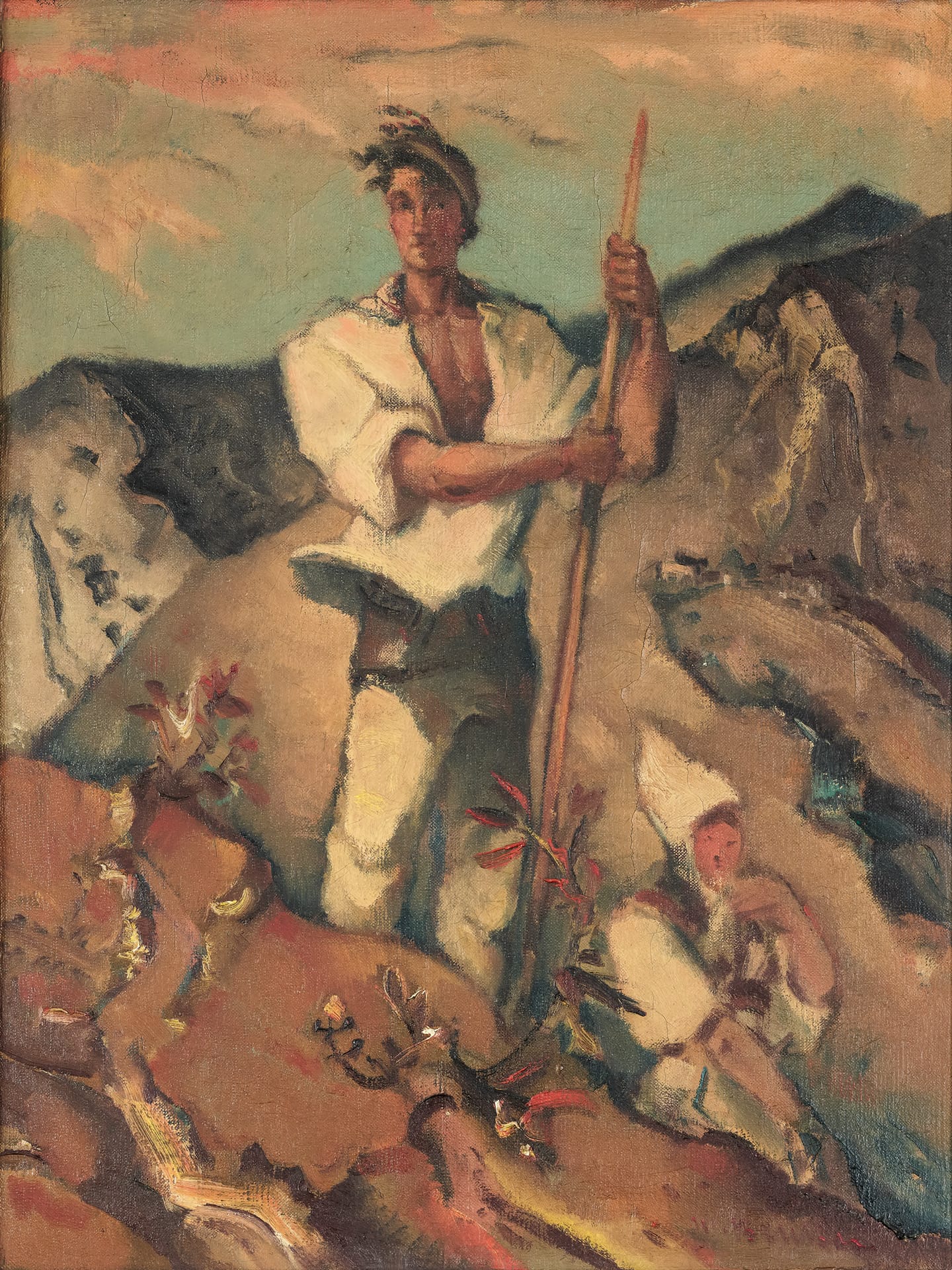
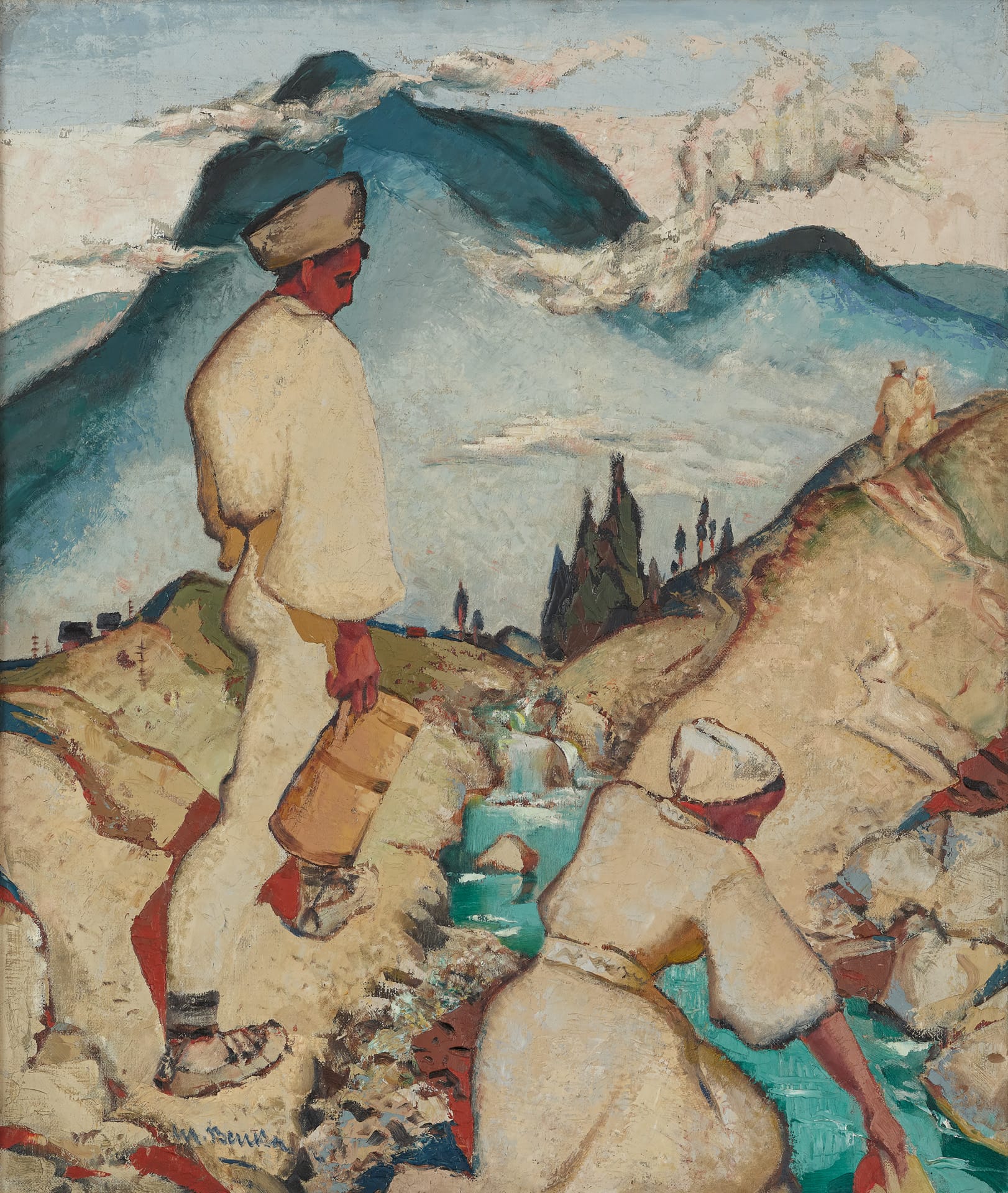
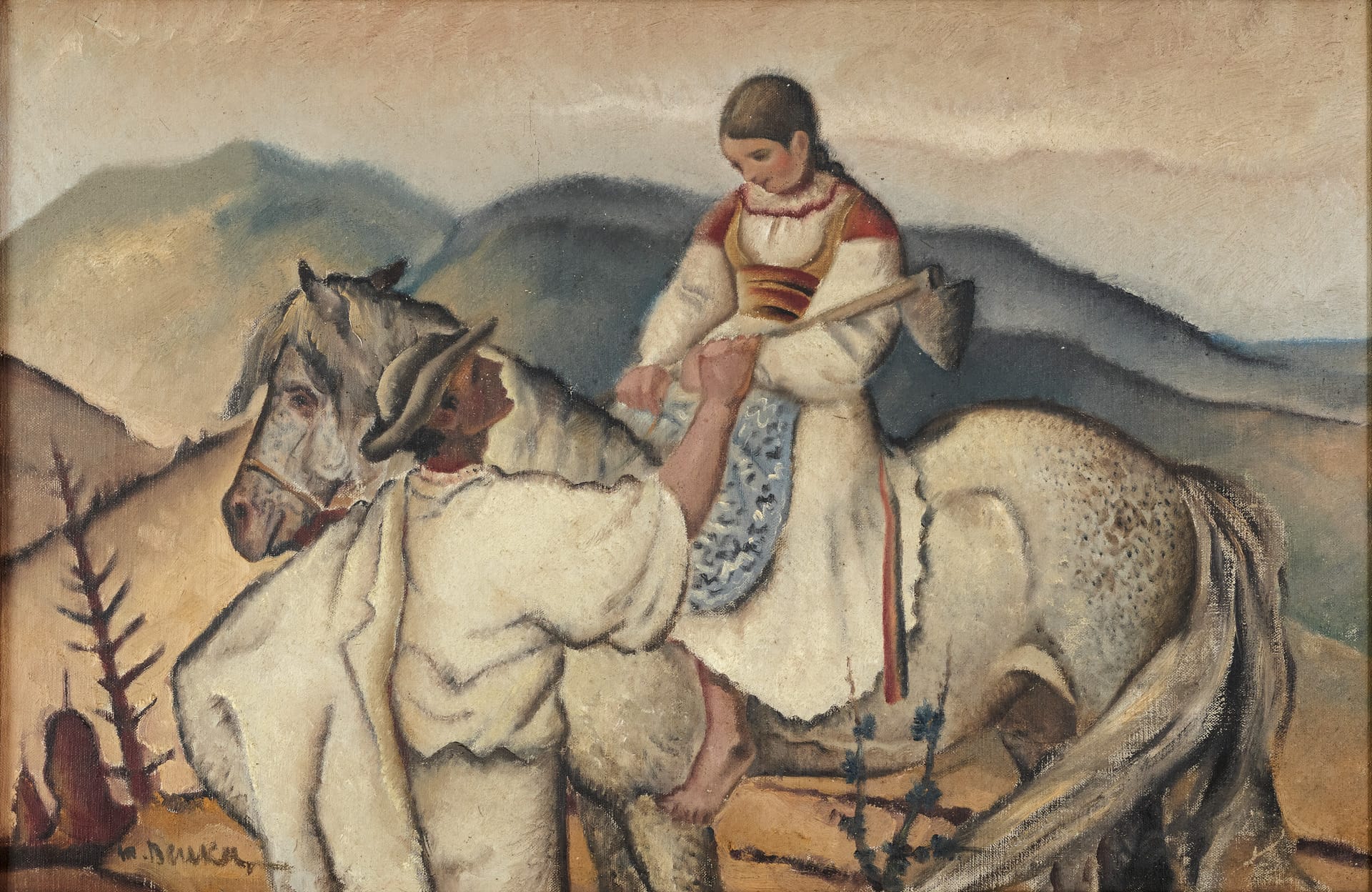
Martin Benka stands as one of the foremost figures of Slovak visual art. His work is familiar to both specialists and the wider public, and his paintings remain among the most sought-after and highly valued on the art market today. The exhibition focuses on his painting and introduces visitors to the artist’s distinctive visual language, which became a cornerstone in the formation of modern Slovak painting.
Martin Benka’s work is an inseparable part of Slovak cultural history. In his paintings he succeeded in uniquely combining modern artistic tendencies with historicising elements that idealise Slovak rural society. His aim was not merely formal innovation, but above all the creation of a Slovak myth – a visual image of the nation that would contribute to its cultural and national self-definition. Benka’s works therefore offer not only an aesthetic experience but also a profound message about the diligence, strength and resilience of the Slovak people.
Form plays a crucial role in Benka’s art. His visual expression evolved gradually from impressionist beginnings to a distinctive decorative approach that art historians describe as Art Nouveau decorativism. This singular style was groundbreaking within the region and had a decisive influence on the further development of Slovak visual art.
The Creator of the Slovak Myth in Painting
Martin Benka was born in Kiripolec (today’s Kostolište) into a large family, and his talent revealed itself at an early age.
He trained as a painter-decorator in Hodonín (1903–1906). From 1906 to 1909 he worked as a journeyman painter in Vienna, where in 1908 he began attending the private studio of E. Neumann. Between 1909 and 1913, thanks to the writer J. Langner, he studied at the private landscape painting school of Alois Kalivoda in Prague.
In 1913 he visited northern Hungary for the first time, especially the Orava region (Veličná). Between 1910 and 1914 he took part in several study trips with students of Kalvoda’s school to the surroundings of Křivoklát and to Moravian Slovakia. In 1914 he acquired his first studio in Prague; from 1915 to 1918 he lived and worked in Miloňovice in the Šumava region.
He held his first solo exhibition in 1915 in Rohatec. He was first introduced in Slovakia in 1920 as part of the Association of Slovak Artists. In 1918 he settled in Prague, where he lived until 1939. Between 1924 and 1936 he undertook several study trips (Italy, Germany, the Netherlands, Belgium, France, Morocco, the Soviet Union). He exhibited several times at the Venice Biennale (1926, 1934, 1942, 1954). He participated in the World Exhibition in Paris in 1937, where he received a silver medal for his painting Landscape from Terchová. In 1939 he settled in Martin. From 1940 to 1941 he served as an associate professor heading the Department of Drawing and Painting at the Slovak Technical University in Bratislava.
In 1958 he moved into a studio house with a gallery in Martin built by the state. In return, in 1964 he donated 5,000 of his works to the state, forming the basis of the collection of the Martin Benka Museum in Martin (part of the Slovak National Museum). A memorial room dedicated to the painter was opened in Kostolište. Martin Benka was a founding member and chairman of the Association of Slovak Artists and of the Fine Arts Section of Matica slovenská in Martin. He received numerous awards at home and abroad, was decorated with the Order of the Republic, and became the first Slovak visual artist to receive the title of National Artist. In addition to painting, he devoted himself to printmaking, applied graphics, and illustration. In 1958 he published his autobiography in book form under the title In Pursuit of Art.
Photo: TASR Archive, photographer Jaroslav Koláček, 23 September 1953 – 65th birthday of academic painter Martin Benka.
The Origin of Modern Fine Art in Slovakia
4th floor
There were many great artists involved in shaping fine art in Slovakia at the turn of the 20th century.
Exposition detailModern art in Slovakia
3rd floor
Slovak fine art in the interwar period was shaping in circumstances of permanent change, which had a tremendous impact on the life of each individual.
Exposition detailMikuláš Galanda Group
2th floor
The activities of Mikuláš Galanda Group from 1957 to its last appearance in Berlin in 1969 played a significant role in the formation of Slovak fine art.
Exposition detailPersonalities and Phenomena
1st floor
The collection of contemporary art since the second half of the 20th century presents works of prominent artists who were crucial in determining the nature of artistic development in Slovakia.
Exposition detailSome things you can enjoy only live
Address
-
Galéria Nedbalka, n. o.
Nedbalova ulica 17
811 01 Bratislava
tel.: +421 2 20 76 60 31
Opening hours
- Open daily
- except Mondays
- 13.00 – 19.00
-
Open